Bunkering
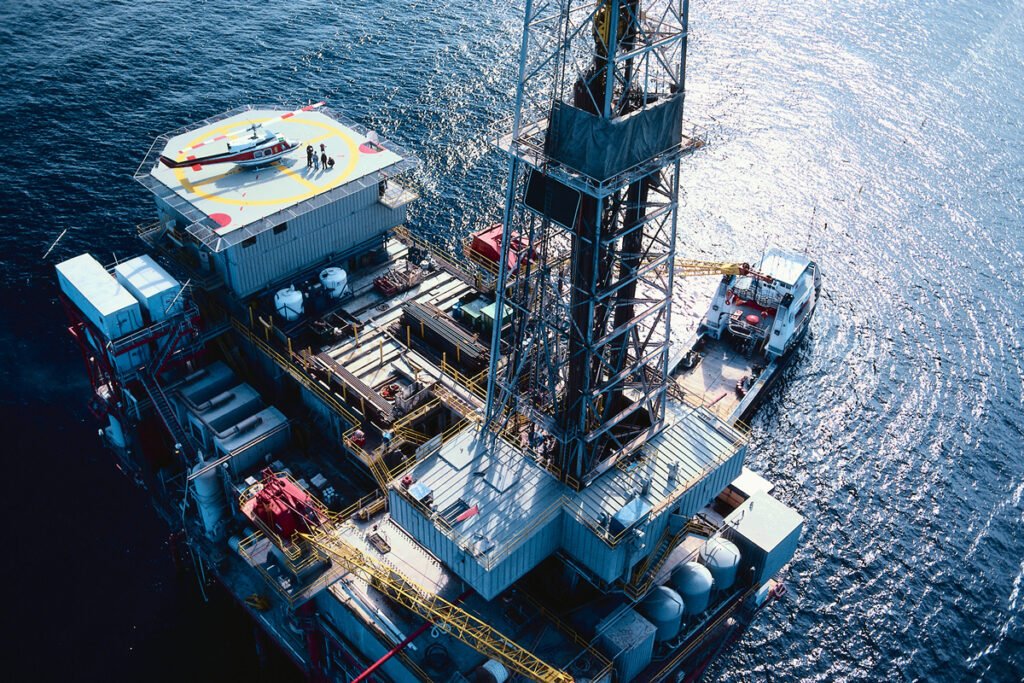
Bunkering
Bunkering refers to the process of supplying fuel to ships, including the logistics involved in loading and distributing the fuel across onboard storage tanks. A professional engaged in this activity is known as a bunker trader. The term “bunkering” originated during the steamship era, when coal was stored in compartments called bunkers.
Ships require different types and grades of oil for their daily operations. Bunkering encompasses the delivery of these fuels and lubricants to vessels, essentially involving the transfer of necessary oil supplies onboard. While this process traditionally occurs at ports, advancements in technology and increased maritime activity now allow bunkering operations to be conducted at sea under suitable weather conditions.
Historically, coal was used to power steam engines in ships and locomotives, and the storage areas for coal were known as bunkers. Over time, the term evolved, and “bunker fuel” came to refer to marine fuel oil used by ships.
Bunker fuel is the residual product obtained from crude oil refining. It is widely used by large ships and industrial plants to power propulsion systems and auxiliary engines. Due to its relatively low cost compared to refined fuels, it plays a significant role in reducing overall transportation expenses.
Marine fuels are typically thick and viscous, making them difficult to handle and store. As a result, they must be heated before use and transferred using specialized procedures. Although bunkering is a complex operation that requires careful planning, coordination, and strict safety practices, there is no universal standard governing the process.
Bunkering Operation At Sea
A significant number of commercial vessels now conduct bunkering operations at sea, while others continue to rely on traditional port-based methods. In ports, bunkering is carried out using dedicated pipelines, berths, and tankers. Additionally, bunker barges operate along major shipping routes, providing fueling services at various offshore locations.
Regardless of the location or method, strict procedures must be followed throughout the bunkering process—from accurately estimating fuel requirements to completing final safety checks. Although the general procedures and associated risks are similar, bunkering at sea presents its own set of advantages and challenges.
Advantages:
- Eliminates the need for vessels to deviate from their course for refueling
- Saves time otherwise spent traveling to and waiting at ports
- Avoids delays caused by port congestion and berthing queues
- Enables faster and more efficient fueling operations
- Reduces port traffic, improving overall logistics efficiency
- Eliminates port-related fees and charges
Disadvantages:
- Maintaining stable positioning between the vessel and bunker barge can be challenging
- Generally involves higher safety risks compared to port-based bunkering
- Limited availability across global locations
- Emergency response support may be slower and less accessible than in ports
- Increased risk of oil spills due to collisions or operational accidents
- Requires specialized arrangements depending on vessel type and fueling method
Types of Bunkering in Ship at Sea
Different bunkering methods are used at sea, depending on operational conditions. Some methods are slower but safer, while others allow faster fuel transfer but require more planning and carry higher risks. The two most common bunkering procedures used by merchant vessels are:
1 ) Ship To Ship Bunkering
Ship-to-ship bunkering is the process of transferring fuel oil between two vessels positioned alongside each other. In this arrangement, one ship serves as the receiving vessel while the other acts as the supplier.
The supplying vessel, often a bunker barge or tanker, is commonly referred to as the mother ship, while the receiving vessel is called the daughter vessel. Fuel hoses are transferred from the mother ship to the receiving vessel using onboard lifting equipment such as cranes. Once properly connected, pumps on the supplying vessel deliver fuel through the hoses.
At the beginning of the operation, pumping is carried out at a low rate to ensure correct transfer to the designated tanks. After verification, the flow rate is gradually increased to complete the operation efficiently and safely.
2 ) Stern Line Bunkering
Stern line bunkering is a method used in rough or unstable sea conditions and is considered one of the more challenging and higher-risk fueling methods. It is typically employed when standard side-by-side bunkering is not feasible due to sea state.
In this procedure, both vessels approach each other carefully and maintain a controlled distance of approximately 100–150 meters. Towing or stern lines are secured to stabilize positioning, and both ships proceed at a slow, synchronized speed of around 2 knots throughout the operation.
Long fuel hoses, sometimes extending up to 200 meters, are transferred between the vessels to complete the fuel delivery. While this method can be effective in calm conditions, it becomes significantly more hazardous in rough seas due to the increased risk of collision and operational instability.